
Cannabis Induced Psychosis: A Silent Epidemic

This film offers a candid and intimate look at cannabis-induced psychosis through the eyes of young people who lived it, revealing the silent epidemic that’s tearing apart families, and the long path to recovery.

Cannabis-Induced Psychosis: A Silent Epidemic pulls back the curtain on a crisis that too often goes unnamed. Told through the voices of young people who’ve lived through psychosis and the parents who tried to hold them together, the film offers an unflinching look at how high-potency THC can fracture lives and upend futures. Families walk us through the hardest moments of their lives as they watch their kids unravel, search for help, and face a system with few answers.

Doctors offer clinical insight, while the young people themselves reflect on what it felt like to lose touch with reality and how they found their way back.

Is cannabis a harmless drug—or a hidden driver of violence and suicide?

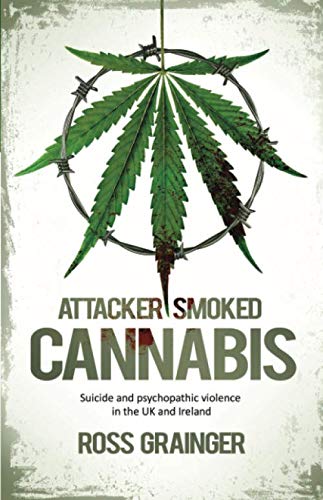
In Attacker Smoked Cannabis, Ross Grainger presents hundreds of cases from the UK and Ireland linking cannabis use to acts of violence and self-harm. Drawing on years of research, the book argues that these incidents are just the beginning—and that a powerful pro-cannabis lobby is downplaying the drug’s true impact on mental health and public safety.

A must-read for anyone seeking evidence-based cannabis policy.
A Compendium of Death and Injury
Related to Marijuana Use

Oregon District Shooter Had Long History of Drug Abuse

Connor Betts, who killed nine people, had a long addiction history including marijuana, meth, and heroin.

Suburban man was high on marijuana while striking, killing 81-year-old, prosecutors allege

Toxicology confirmed the driver’s THC levels were above the legal limit in the deadly pedestrian crash.

16-year-old girl shot in the head after refusing to pick up marijuana bag, KY cops say

Scarlett Tucker was killed after refusing to pick up dropped weed; the shooter was 18. Source: Yahoo News / Mike Stunson Published: January 5, 2023

Affluenza Teen Used Marijuana Before Fatal DUI Crash

Ethan Couch, who killed four people while driving drunk, admitted to using marijuana and other drugs before the crash.

Chicago Man Fatally Shoots Childhood Friend, Steals His Marijuana Blunt

A man executed his friend over a marijuana blunt, raising concerns about normalized cannabis culture and youth violence.

Paris Suicide Bomber Owned Marijuana-Scented Bar

Brahim Abdeslam ran a bar known for marijuana use before joining ISIS and bombing a Paris café.

Cannabis-Induced Psychosis Leads to Beheading at Cottage

Adam Kehl, in a state of cannabis-induced psychosis, stabbed and decapitated his father at a family gathering.

Infant Dies After Parents Use Marijuana, Cocaine, and Fentanyl

A 4-month-old in South Carolina was killed after ingesting cocaine through feeding bottles; parents also tested positive for marijuana.

Driver High on Marijuana Killed Trucker in Fiery Crash

Stephen Jamal Palmer was high on marijuana and alcohol when he triggered a deadly freeway crash, killing Joseph Bartkowski.

Coroner: Driver at fault in Wyoming crash that killed 5 was intoxicated, high

Whitney SunRhodes was found to be impaired by both alcohol and marijuana when she caused a head-on crash in Wyoming that killed herself and four others. The crash victims were ruled homicides.

Teens rescue girl from horrific crash that killed her pregnant mother

Two teens rescued a 1-year-old girl from a fatal crash that killed her pregnant mother. The crash was caused by Jacob Kaminski, who was reportedly under the influence of marijuana and attempting an illegal pass.

Two Teens Killed in Crash After Driver Smoked Marijuana

DUI Driver Killed Woman in 100mph July 4 Crash

6-Year-Old Killed by Drunk and High Driver

THC Found in Man Who Caused Rollover Death

Two Teens Killed in Crash After Driver Smoked Marijuana

Wrong-Way Crash Driver Had Marijuana and Alcohol in System

Father Smoked Pot While Neglecting Infant Who Later Died

Wrong-Way Crash Driver Had Marijuana and Alcohol in System

Two Teens Killed in Crash After Driver Smoked Marijuana

DUI Driver Killed Woman in 100mph July 4 Crash

6-Year-Old Killed by Drunk and High Driver

Father Smoked Pot While Neglecting Infant Who Later Died

Two Teens Killed in Crash After Driver Smoked Marijuana

THC Found in Man Who Caused Rollover Death

Scroll to Top

SPECIAL REPORT: 'Overdosing' on Weed? Can Cannabis Kill?

Introduction

In the haze of cannabis legalization, the dominant narrative whispers reassurances: “It’s natural,” “It’s safer than alcohol,” “No one dies from marijuana.” Yet, these comforting mantras mask a growing body of evidence that demands a reckoning. Cannabis is not the benign substance its advocates claim. Beneath the green marketing lies a darker reality—one marked by sudden deaths, fatal neonatal outcomes, and an alarming rise in youth mortality. The question is not whether cannabis can harm or kill, but how much damage we are willing to ignore.

"Death by a Thousand Hits" — Sudden, Unexpected Deaths

Contrary to the widespread belief that cannabis cannot kill, several case studies tell a more troubling story. In Louisiana, Dr. Christy Montegut reported what is considered the first THC overdose, concluding that a 39-year-old woman suffered fatal respiratory failure after vaping high-concentration THC oil. Her autopsy revealed no other contributing substances or conditions [19].

German researchers Hartung et al. documented two cases of young men, ages 23 and 28, who died unexpectedly under the acute influence of cannabis. Full autopsies and toxicological analyses pointed to fatal cardiovascular complications, such as arrhythmias and heart failure, triggered by cannabis use. Neither individual had significant underlying health issues [20][23]. These reports dismantle the “no-fatalities” myth, exposing a direct, albeit rare, link between cannabis and sudden death.

Further complicating the narrative are reports suggesting that cannabis can trigger hypertensive crises and thrombus formations, conditions typically associated with high cardiovascular risk profiles. Marijuana’s effect on increasing heart rate and blood pressure places significant strain on the cardiovascular system, especially when combined with the higher potency THC products now saturating the market.

"Not So Harmless for the Helpless" — Pediatric and Neonatal Risks

The narrative of cannabis safety becomes even more grotesque when it touches the most vulnerable. In 2019, the American Journal of Case Reports detailed the death of an 11-day-old neonate from extensive necrosis and hemorrhage of the liver and adrenals—directly linked to maternal marijuana use during pregnancy. This was not a case of confounding factors; extensive autopsy ruled out other causes [22].

Meanwhile, Arizona’s 2013 child mortality data revealed a harrowing statistic: marijuana was the most prevalent substance linked to the deaths of children under 18—outpacing alcohol and methamphetamine. Sixty-two young lives were snuffed out in one year alone [21], underscoring a grim reality: the normalization of cannabis use comes at a steep, often invisible, cost.

Newer data trends suggest that cannabis exposure during pregnancy can lead to low birth weights, developmental delays, and long-term neurocognitive deficits in surviving infants. These risks remain underreported in mainstream cannabis debates.

"The Green Epidemic" — Rise in Adolescent Harms

With legalization comes accessibility, and with accessibility comes consequence. Colorado’s post-legalization data shows a 22% surge in marijuana use among adolescents aged 12-17—38% higher than the national average [21]. This trend is not benign.

Research indicates that cannabis use during adolescence significantly impairs memory, learning, attention, and reaction time—with cognitive deficits lingering long after intoxication wears off. Longitudinal studies have tied chronic adolescent cannabis use to a permanent loss of up to eight IQ points. More chillingly, marijuana use increases the risk of psychosis and suicidal ideation in youth [21].

Educational performance is equally impacted. Adolescents who regularly use cannabis are significantly less likely to graduate high school or complete a college degree. Increased cannabis availability also correlates with higher rates of academic failure, truancy, and social disengagement—factors that contribute to a broader societal cost.

Mental health repercussions are equally concerning. Heavy teenage cannabis users are more likely to suffer from mood disorders, anxiety, and suicidal behavior later in life. These mental health burdens place additional strain on already overburdened healthcare systems.

"The Quiet Killer" — Chronic Conditions and Underreported Syndromes

Cannabis’ chronic dangers do not always arrive in dramatic fashion. Sometimes, they erode life silently.

Take Cannabinoid Hyperemesis Syndrome (CHS), a little-known but increasingly prevalent condition among heavy cannabis users. It causes relentless vomiting, nausea, and abdominal pain. In Indiana, 17-year-old Brian Smith died from dehydration linked to CHS, his kidneys failing under the strain [26]. Emergency departments in states with legal cannabis report increasing numbers of CHS cases, yet awareness remains low among both users and medical professionals.

Beyond CHS, marijuana use has been associated with lung damage comparable to smoking a pack of cigarettes a day, increased cancer risks, and up to sixfold higher rates of schizophrenia among users [23]. A systematic review published in the British Medical Journal notes that heavy cannabis users are far more likely to suffer from chronic bronchitis and other respiratory ailments compared to non-users.

Moreover, modern high-potency cannabis concentrates, often exceeding 70% THC, may pose even greater risks to respiratory and mental health than traditional smoked cannabis, magnifying the potential for long-term harm.

"Hidden in Plain Sight" — Hemp, Contaminants, and Unregulated Exposure

Even consumers seeking health-conscious alternatives are not safe. A study on consumer-grade hemp seeds—widely regarded as a “superfood”—revealed THC levels exceeding legal limits by as much as 1250%. A daily recommended serving could deliver up to 3.8 mg of THC—unregulated, unmonitored, and potentially dangerous [24].

This isn’t an isolated issue; it’s a symptom of a marketplace where regulation lags dangerously behind commercialization. Unintended exposures and cumulative low-dose intake add another layer of risk that the public is largely unaware of.

Moreover, contamination issues extend beyond THC. Pesticides, heavy metals, and mold have been detected in numerous cannabis and hemp products, including those marketed as “organic” or “medical grade.” Without stringent oversight and standardized testing protocols, consumers are left vulnerable to these hidden hazards.

Conclusion

The greatest myth in all this is actually a patent lie dressed up in well spun ‘legal-ease’ speak; and that is that legalizing this psychotropic toxin would make everything safer, healthier and even less culpable. However, that outrageous myth is stripped bare in the light of any genuine scrutiny. The evidence is clear, unsettling, and urgent: cannabis is not the benign substance the world has been sold. From sudden deaths to neonatal fatalities, from cognitive erosion and growing mental health endemic, to hidden contaminants, the harms are real and mounting.

Policymakers must abandon complacency. Cannabis legalization was an egregious mistake, but one that politically will prove difficult, but not impossible to remedy. At a bare minimum, cannabis legalization must be accompanied by rigorous public health campaigns, strict potency limits, standardized testing, robust warning labels and liability for public health costs to all manufacturers and purveyors of this drug. The tobacco and alcohol industries offer cautionary tales of regulatory negligence—lessons we cannot afford to ignore any longer, as the shocking fallout from those addiction for profit industries is now being played out again with cannabis. 

It is time to flip the script. We must confront the uncomfortable truths about cannabis before yet another generation falls prey to the myths. Legalization without robust, highly accountable and thoroughly enforced regulation is not progress—it’s negligence masquerading as freedom.


The question is no longer whether cannabis can kill. The question is: how much collateral damage are we willing to tolerate in the name of getting high?

Written and compiled by WRD News Team

References