BETTER OPTIONS
A BETTER WAY
“There’s NOTHING Compassionate About Letting Someone ‘Stew’ in Their Addiction!”
The Declaration of OVIEDO
On June 9th, 2023, national and international experts met in Oviedo, Spain, in a consultation organized by Proyecto Hombre, to explore effective strategies for preventing drug use aligned with international scientific standards. Such strategies address vulnerabilities linked to negative social and health consequences as well as addictive behaviors. Stemming from the consultation, the following declaration has been adopted to scale up prevention at the forefront of drug policy. 5 In accordance with the existing global declarations and political commitments that function as road maps for countries, namely the 2016 UNGASS Outcome Document and the 2019 Ministerial Declaration that highlight the value of evidence-based prevention and especially mentioning the UNODC/WHO International Standards on Drug Use Prevention. (SIGN ON TODAY)
Why Our Courts Should Focus on Recovery,
Not Just Punishment
When we think about the justice system, many of us picture judges handing down sentences, offenders going to prison, and a cycle that often just repeats itself. But what if the courts could be more than just places of punishment? What if they could be places of healing?
That’s the vision behind a growing movement to rethink how we respond to drug-related offences—shifting the focus from incarceration to rehabilitation, and redefining the role of the judiciary as a “judicial educator.”
US Senate Passes Landmark Hemp-THC Ban to Protect Public Health
The U.S. Senate has delivered a decisive victory for public health and the legitimate hemp industry by passing legislation that bans intoxicating hemp products containing THC. On November 10, 2025, senators voted 76 to 24 to reject an amendment that would have removed the hemp-THC ban from a critical government spending bill, marking a historic turning point in federal hemp regulation.
- Information from AALM.info on the US Senate hemp-THC vote, November 10, 2025.
From Judge to Educator: A New Vision for Justice
At the core of this idea is a bold (and promising) notion: that our legal system can actively help people rebuild their lives. Rather than imprisoning individuals for drug use or possession, the courts can guide them towards recovery—using their authority to support treatment and long-term change.
This isn’t about being lenient on crime. It’s about being smarter in how we address it. Addiction is, at its root, a health issue—and treating it as such can deliver profound personal and societal outcomes.
Wandoo Prison: Proof That a New Approach Works
One of the strongest examples of this rehabilitative model in action comes from Western Australia, with the Wandoo Rehabilitation Prison. It’s the country’s first Alcohol and Other Drug Treatment Prison for women, and the results speak for themselves:
- Over 100 women have completed its intensive, six-month therapeutic programme.
- Fewer than 1% have returned to prison—compared with a national average of around 46%.
- The facility has remained entirely drug-free since opening.
These outcomes suggest that, when done right, rehabilitation can be not only compassionate but highly effective.
Drug Courts: Bridging Law and Recovery
Drug courts are another vital piece of the puzzle. These specialised courts divert eligible individuals away from the traditional criminal process and into structured recovery programmes. The aim is to treat the root cause of the offence—addiction—while still ensuring accountability.
This approach uses the legal system not just to deter harmful behaviour, but to genuinely change lives. It’s a blend of justice and health, law and empathy.
Concerns About Decriminalisation and Harm Reduction
Not everyone supports more liberal drug policies. Organisations like the Dalgarno Institute argue that decriminalisation and harm reduction strategies, while well-intentioned, may inadvertently normalise drug use. They believe these models risk reducing the incentive for individuals to seek recovery.
Instead, they advocate for a supportive but firm legal structure that encourages people to get the help they need—viewing the law not just as a deterrent, but as a tool for positive redirection.
Sources
So, What’s the Takeaway?
Our justice system doesn’t have to be solely punitive. By treating addiction as a health issue, and by using the courts as a gateway to recovery rather than a holding pen, we open the door to real, lasting change.
The success of programmes like Wandoo, the growing impact of drug courts, and the concept of the “judicial educator” all point to a more compassionate and effective way forward. It’s not just about reducing reoffending—it’s about rebuilding lives.
Harm Reduction in Full Flight - North America Snapshot
Declaration of Oviedo: Asia Pacific Hearing (June 2024)
"Can't Say NO 2 Drugs"- PART TWO (No Brainer)
Strong Culture Builds Resilience… Yolŋu Indigenous Elder shares
Dr K Sabet SAM Statement on Priority of Prevention 67th CND2024
UN Rights of the Child CRC Article 33 - Why is This Being Ignored?
What is Resiliency-Teach Our Kids
How to use the DSO8 Plus Saliva Drug Test Kit
Prevention Priority Track – 8th World Forum and 27th ECAD’s Mayors’ Conference
7 Tips for Effective Parenting for online publication
L.E.A.D. (Law Enforcement Assisted Diversion)
Seattle’s ‘Radical Approach’ To Heroin Epidemic Not dissimilar to Swedish Model Featured On PBS Documentary.
This, whilst a good effort, is a poorer cousin of the long established strict but compassionate drug user diversion program set up in Sweden decades ago. This, like drug courts, enables the law to be a useful collaborator in the recalibrating educative process and recovery for substance users.
Heroin addict thanks judge for saving her life
Global Commission on Drug Policy’s report – Pathways to Drug Policies that Work
For Drug Users, a Swift Response Is the Best Medicine
Seizing the Drug Policy Initiative
Busting the Myth That Marijuana Doesn’t Kill in 1 minute
Diversion Programs Work – because of criminalization!
There is an exceptional initiative that has been trialled, piloted and implemented and all using criminalisation status to bring real and lasting change to substance users -no not just keep addicts alive and using – but giving addicts and dependent others a chance at living a life by getting them off drugs and back being a complete person again!
Drug Courts are successfully turning lives around from Hawaii to Miami and saving not only lives and potential, but millions of dollars that would otherwise be spent in continuing dependency, unproductive jail time and maintenance of damaging harm sustaining practices.
"…Drug courts are based on the assumption that drug abuse can, in fact, be positively addressed by the legal system…For example, it's easy to calculate the savings to taxpayers from King County's Drug Diversion Court: $11.2 million between 2005 and 2010.
A couple of recent days spent watching proceedings on the ninth floor of the King County Courthouse illustrated other reasons why those involved in our local drug court - judges, administrators, and even the arrested addicts…
A July report by the Washington State Institute for Public Policy found that state-wide, drug courts saved Washington taxpayers $7,651 per participant over that participant's lifetime."
Drug Courts
HOPE Probation
HOPE Probation, launched in Hawaii in 2004, revolutionizes community corrections by delivering immediate consequences for rule violations. Instead of delayed, uncertain punishments that characterize traditional probation, HOPE ensures that any violation results in a quick jail stint. This swift and certain approach makes offenders think twice before breaking rules, since they know consequences are guaranteed and immediate.
Unlike programs that target low-risk offenders for easy wins, HOPE deliberately focuses on high-risk felons with serious criminal histories, drug problems, and past probation failures. Research shows this approach works better—targeting those most likely to reoffend produces greater crime reduction benefits. The program doesn’t replace other supervision methods but makes them more effective through immediate accountability.
The results speak for themselves: dramatic reductions in drug use, fewer missed appointments, and better compliance rates compared to regular probation. HOPE’s success has spread nationwide, with jurisdictions across America adopting similar swift-and-certain strategies. The program proves that clear rules combined with guaranteed, immediate consequences create lasting behavioral change while saving taxpayer money on prison costs.
Drug Rehabilitation Programme Coventry:
O2R Initiative Transforms Lives and Cuts Crime
Society for Prevention Research (SPR) is dedicated to advancing scientific investigation on the etiology and prevention of social, physical and mental health, and the translation of that information to promote health and well-being. The multi-disciplinary membership of SPR is international and includes scientists, practitioners, advocates, administrators, and policy makers who value the conduct and dissemination of prevention science worldwide.
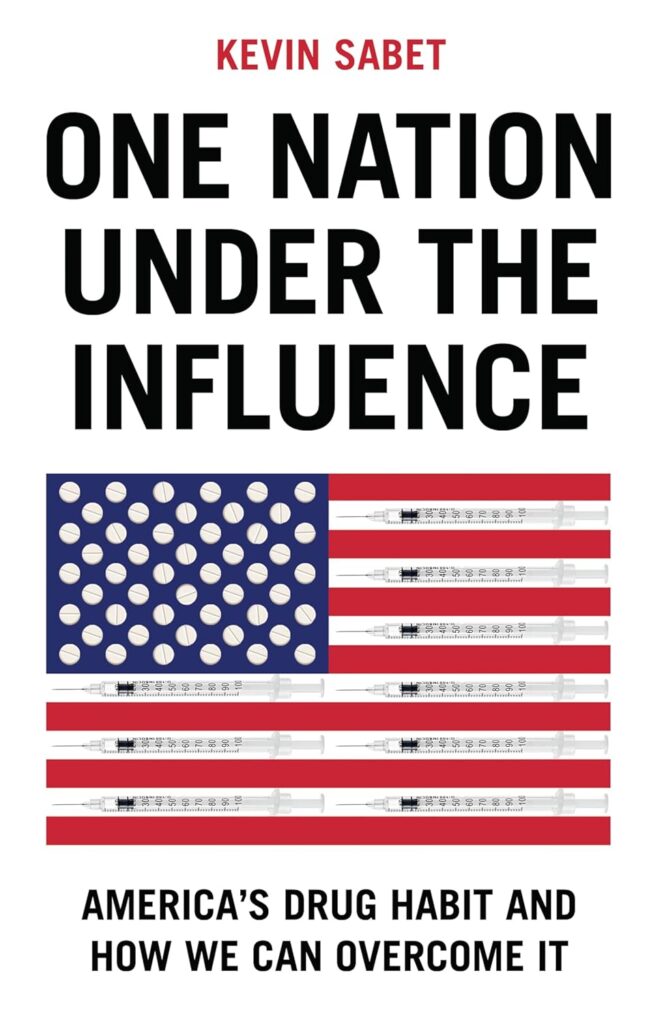
A powerful look at America’s drug crisis and the policies that failed us and what real solutions look like.
Buy on Amazon